


























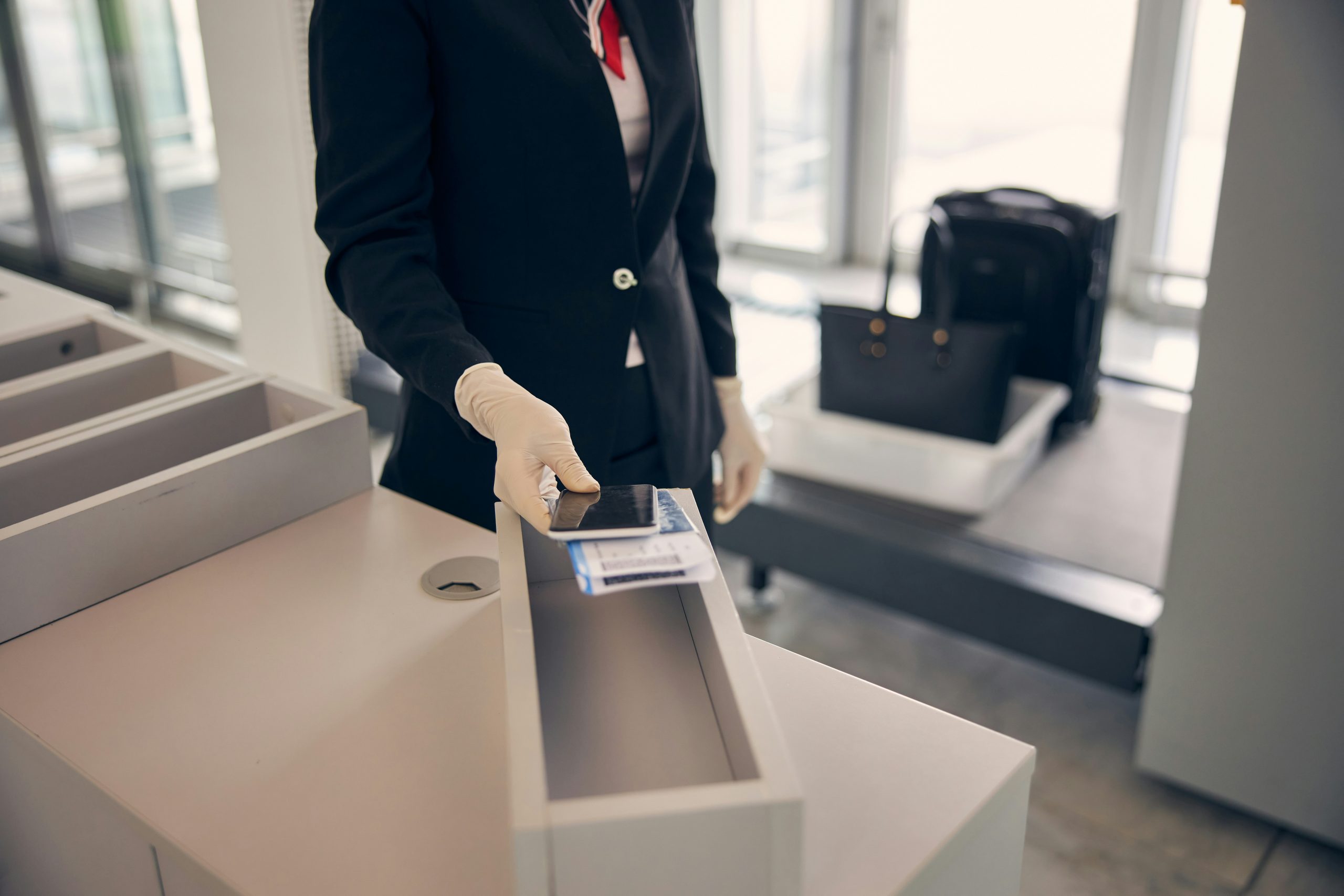
From 12 October 2025, a major change is coming to Europe’s borders, with airports, ports, and train terminals bracing for serious disruption as the EU begins rolling out its new biometric Entry-Exit System.
Under the new system, non-EU travellers entering or leaving the Schengen Area will be required to provide fingerprints and facial scans. Manual passport stamping will be phased out and replaced with digital tracking, with the rollout continuing through April 2026.
What may sound like a technical upgrade is likely to be felt quickly on the ground. Longer queues, slower processing, and added pressure on border staff are widely expected. For airlines, travellers, and governments alike, the test will be whether Europe’s border infrastructure can absorb the change without widespread delays.
Join The European Business Briefing
The daily email on markets, technology, power and money across Europe. Join 10,000+ founders, investors and executives who read EBM every morning.
SubscribeWhat Exactly is the EES?
The Entry-Exit System is the EU’s latest regulatory framework aimed at strengthening border security, tracking overstays and standardising cross-border processes across member states. Under the EES:
-
Non-EU nationals (often referred to as “third-country nationals”) will have facial and fingerprint data captured the first time they cross into the Schengen area. Financial Times
-
The system records both entry and exit dates, enabling authorities to verify whether visitors have stayed beyond the 90-day / 180-day rule.
-
After the initial registration, future crossings should be faster – although change of passport, long absence or other triggers may require fresh enrolment. Financial Times
-
Full implementation is scheduled by 10 April 2026, but a phased approach means only some border points are live initially. Financial Times+1
Why the EU is Rolling It Out
Several strategic motivations drive the EES rollout:
-
Security & Identity Verification – Fingerprints and facial recognition will make it harder to re-use stolen identities or circumvent controls.
-
Tracking Overstays – One enduring issue in the Schengen zone is visitors staying longer than permitted; EES gives authorities an automated enforcement mechanism.
-
Harmonisation of Border Procedures – Until now, member states have followed varied manual, semi-automated or informal border regimes; the EES aims to unify them.
-
Modernising Border Infrastructure – The shift reflects broader themes of digital transformation, data-driven migration policy and border tech.
But modernisation comes with cost, complexity and risk.
What Travellers Should Expect (And Worry About)
For many non-EU travellers (including UK citizens, business visitors or conference delegates) the first impression of the EES will be longer wait times and added procedural steps:
-
On first registration, travellers must complete biometric enrolment: passport scan, fingerprint capture, facial image and data entry. Expect the first instance to be significantly slower than a basic stamp. European Business Magazine
-
Queues and longer processing times are likely at airports, ports and train terminals — especially during peak travel hours.
-
Travellers should plan to arrive earlier than usual: under current estimates, buffer time is increasingly important.
-
Pre-registration tools may help at some entry points, but not all states or terminals have them in place yet.
-
Privacy and data-protection concerns loom large. Biometric data will be stored and used under EU rules (including GDPR) – but travellers may still ask: how safe is their data, who sees it, for how long?
-
Because of the phased rollout, old (passport-stamp) and new (EES) systems will coexist for months — meaning inconsistency and unpredictability may persist. Financial Times+1
-
Some categories are exempt (children under 12, long-stay visa-holders etc) — knowing your status helps avoid surprises.
Airports, Ports and Rail Terminals: Operational Readiness
For operators and border agencies, the EES rollout is a major logistical, technological and financial undertaking.
Infrastructure investment
-
Many border posts need new kiosks or enrolment booths (fingerprint scanners, facial-scan cameras etc). Some terminals require major redesign. Financial Times
-
Staff must be trained on the new systems, on data-handling procedures, and on newly designed traffic flows.
-
IT systems need to securely capture, store and transmit biometric data to central EU databases – with backup, redundancy and oversight built in.
Phased rollout and “soft launch”
-
The system will initially be implemented for coaches/freight traffic, certain ports or airports, before passenger cars or smaller terminals follow.
-
To minimize disruption, border authorities may use contingency lanes or slower-tracked “transitional” queues. Travelling for Business
-
Cost and political push-back are real: installation and operational changes will be expensive, and governments/ports may face criticism if queues or delays spike.
Case Study: UK / Channel Crossings
Because of the UK’s post-Brexit status and the juxtaposed control model at the Port of Dover, Eurotunnel (Folkestone) and Eurostar (St Pancras) the stakes are especially high. Financial Times
-
Eurotunnel reports tens of millions invested in kiosks, staff and process upgrades.
-
The UK government allocated £10.5 million to assist infrastructure upgrades and avoid road bottlenecks.
-
Although operators estimate the added time per car or passenger may be limited (a couple of minutes), industry watchers warn that cumulative delays could still be serious during holiday peaks. bloomberg.com
Potential Bottlenecks & Risk Scenarios
Despite preparation, risk remains. Points of concern include:
-
Peak-season travel (summer holidays, major events) when volumes are high.
-
Smaller airports or remote ports likely to be slower in roll-out or less well-resourced.
-
Tech glitches or kiosks failing may revert processing back to manual, creating backups.
-
Low awareness among travellers who may not arrive early or expect the new process.
-
Cross-border coordination issues (especially UK-EU, land/sea transitions) may create cascading delays.
-
Legal and privacy challenges (complaints about biometric data use) may slow or complicate implementation.
Impact: Travellers, Airlines, Tourism & Trade
Travellers
-
Must allow more time at border control.
-
Might need to adjust travel schedules (early arrival, flexible onward connections).
-
Some risk of missed flights, delayed check-in or increased cost for business travellers.
Airlines & Travel Operators
-
Might need to build in extra time into schedules, adjust staffing.
-
Risk of customer service issues (missed flights, unhappy travellers).
-
Possibly increased costs – staffing, delays, technology investments.
Airports, Ports & Infrastructure
-
Need to manage capacity, redesign flows, potentially pass on costs.
-
For airports heavily reliant on tourism or business travel, any negative traveller experience might hurt reputation.
Economy & Global Trade
-
Delays at major entry/exit points may ripple into freight, coach travel and business travel.
-
For Europe’s travel-dependent industries, timing and reliability matter.
-
For business travel (conferences, cross-border trade) the new regime raises questions about trade efficiency and supply-chain resilience.
Broader Implications & Policy Issues
Privacy, Data & Ethics
-
Who has access to the biometric data? How long is it stored? What safeguards exist?
-
Some travellers may resist facial recognition or fingerprinting on principle.
-
Oversight, transparency and data protection are critical.
Immigration & Border Policy
-
Enhanced overstay tracking may affect debates around visa policy, migration flows and border management.
-
The EES ties into broader EU systems such as the forthcoming ETIAS (European Travel Information & Authorisation System).
Geopolitics & Cross-Border Relations
-
UK-EU coordination is especially studied — port readiness, training, data exchange.
-
Member-state readiness varies; slower states may become pressure points within the Schengen zone.
What Travellers & Stakeholders Should Do to Prepare
Here’s a practical checklist:
-
Confirm your travel dates and first point of entry into the Schengen area.
-
Arrive earlier than usual; make time allowances for border processing.
-
Carry correct documentation: valid passport, return ticket or onward address, proof of funds (if required).
-
Check whether your entry point is already live with EES — many smaller crossings may not be ready yet.
-
Monitor updates from your airline, airport operator or travel-agent.
-
For business travellers: build in buffer time for meetings, connections, transfers.
Conclusion
The EES marks a transformative moment in European border policy: advanced biometric enrolment, unified data tracking and digital standardisation. For non-EU travellers — including the business-minded Italian executive heading to a board meeting or the British CEO flying for deal-making in Paris — the era of breeze-through entry is ending. For airports and travel hubs, the race is on to ensure infrastructure, training and systems are ready.
In the months ahead, the test will be whether Europe’s border architecture can cope without becoming a drag on travel and commerce — or whether those long queues at Dover, Schiphol or any major terminal become part of the travel experience again. Either way, the message to travellers is clear: plan ahead